The laboratory exists to answer specific questions about specific material. It is not a screening service: if a test will not change what you do next, we will say so and decline the work.
Methods and scope
| Method | Basis | Sample needed | Scheme |
|---|---|---|---|
| Fibre furnish identification | Herzberg and Graff “C” staining, transmitted light microscopy | 2 mm² fragment | Research method |
| Cold extraction pH | TAPPI T509-equivalent, 6 mm disc, one hour | 6 mm disc | 17025 scope |
| Hot extraction pH | TAPPI T435-equivalent | 0.5 g | 17025 scope |
| Alkaline reserve | Acid titration to end point, reported as % CaCO₃ | 0.5 g | 17025 scope |
| Lignin presence | Phloroglucinol spot test | Non-destructive on a tear edge | Research method |
| Fold endurance | MIT-type folding endurance tester | Six strips, 15 mm | 17025 scope |
| Tensile and tear | Constant rate of elongation; Elmendorf tear | Six strips | 17025 scope |
| Colour measurement | Spectrophotometer, D65/10°, CIE L*a*b* | Non-destructive, 8 mm aperture | 17025 scope |
| Iron(II) indication | Bathophenanthroline indicator paper, timed contact | Non-destructive, damp contact | Research method |
| Mould identification | Tape lift, light microscopy; culture where required | Tape lift | Research method |
Methods marked research method are run to a written internal procedure but sit outside the accredited scope. That distinction is printed on the front page of every report. We would rather lose the work than let an unaccredited result be quoted as an accredited one.
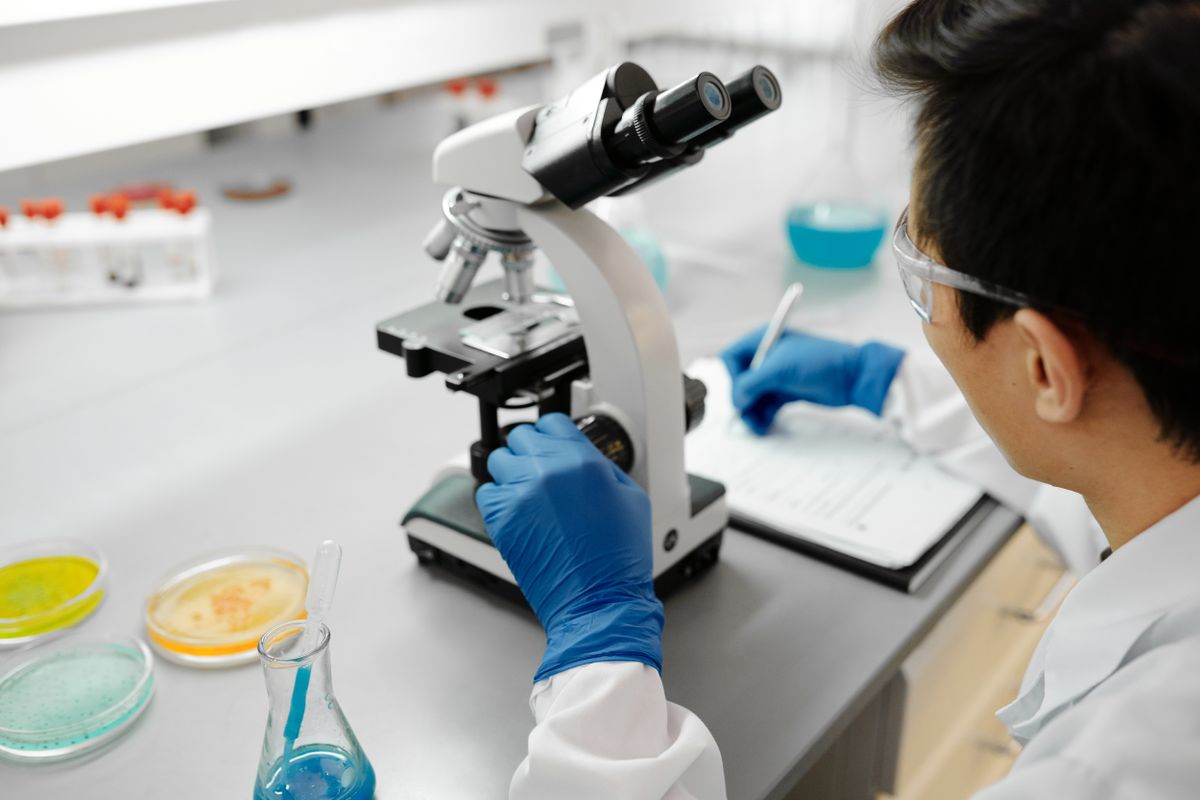
Accelerated ageing
The rig runs at 80 °C and 65% relative humidity, recommissioned in June 2026 after a full calibration against three reference stocks. Ageing is useful for comparing two materials under identical stress. It is much weaker as a predictor of years on a shelf, and anyone quoting a conversion factor from oven hours to calendar years is selling something.
Our 2022 round robin put identical stock through four laboratories’ ageing protocols. Fold endurance after ageing varied by a factor of 2.6 between laboratories on the same paper. We publish that result because it constrains how much weight anyone should put on a single ageing figure, including ours.
Submitting a sample
- Write to the laboratory desk with a description of the material, the decision the result will feed, and whether sampling is permitted. The second point matters more than the first.
- We reply with a scope, a fee and — where relevant — a statement that the question cannot be answered by the tests you asked for.
- Samples travel in an inert sleeve inside a rigid box, with the reference number written on the sleeve, never on the item. Do not send the item itself unless we have agreed to a non-destructive measurement in person.
- Material is retained for six months after reporting, then returned or, on written instruction, retained in the reference set.
Turnaround and fees
| Work | Typical turnaround | Basis of fee |
|---|---|---|
| Single method, one sample | 10 working days | Fixed per method |
| Characterisation set (furnish, pH, reserve, lignin) | 15 working days | Fixed, four methods |
| Survey of 20–200 items | 6 to 14 weeks | Day rate plus consumables |
| Environmental monitoring loan | 12 months, then 6 weeks to report | Loan fee, waived for programme partners |
| Accelerated ageing comparison | 8 weeks | Per stock, minimum two stocks |
Charities and local authority archives are charged at a reduced schedule; the difference is met from the centre’s endowment, not cross-subsidised from commercial work, so it does not lapse when commercial demand falls.
What a report contains
Every report states the method, the instrument, the operator’s procedure reference, the measurement uncertainty and — the section people actually read twice — what the result does not support. A pH of 4.2 tells you the extract of that disc was acidic. It does not tell you the leaf will fail, that treatment is required, or that the rest of the volume matches.
Reports are issued as a signed PDF from the laboratory desk, with the raw instrument output attached as a separate file. Where a result is at or near the limit of a method, we say “at the limit” rather than rounding into a conclusion.