Centre reports
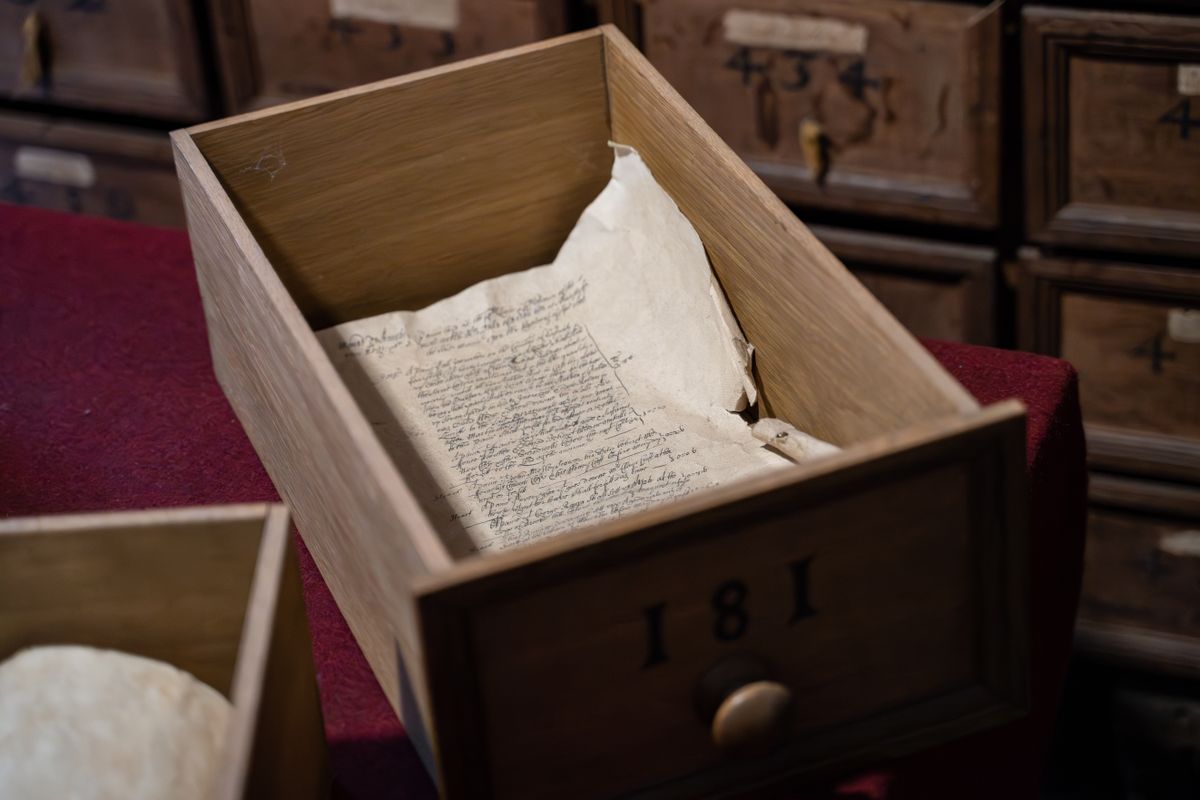 Centre report 14
Iron Gall Ink Corrosion in Regional Estate Papers
2026 · 78 pp Centre report 13
Fibre Furnish of British Machine-Made Papers, 1860–1935
2025 · 122 pp Centre report 12
Mould Recovery After Two Wetting Incidents
2024 · 44 pp Centre report 11
Nightly Setback in Four Local Authority Stores
2024 · 51 pp Centre report 10
Accelerated Ageing Round Robin: Four Laboratories, One Stock
2022 · 36 ppTechnical notes
Short, single-question pieces, four to twelve pages, written for the person who has to make a decision this month. Each is dated and superseded rather than silently edited.
| No. | Title | Issued | Status |
|---|---|---|---|
| 9 | Reading pH results from cold extraction without overstating them | 2026 | Current |
| 8 | Tape lifts for mould: sampling, transport and what culture adds | 2025 | Current |
| 7 | Photographing a leaf in transmitted light for perforation counts | 2025 | Current |
| 6 | Loggers on shelves: placement, calibration drift and reading the record | 2024 | Current |
| 5 | Interpreting colourimetry on discoloured paper | 2023 | Current |
| 4 | Bathophenanthroline: what a positive result licenses | 2022 | Superseded by no. 9 in part |
| 3 | Sampling from tear edges without creating new loss | 2021 | Current |
Guidance
Guidance notes are written with a working group drawn from partner archives, and are the only documents here that recommend rather than report.
- Surface cleaning: what the evidence supports (2025) — six materials tested for gloss change, colour change and abrasion; two of them should not be in general use.
- Triage in a wetting incident: the first seventy-two hours (2024).
- Specifying an environmental survey (2023) — what to ask a contractor for, and how to tell whether you got it.
- Handling and support for bound volumes under digitisation (2022).
Publication policy
Programme results are published whether or not they support the hypothesis the programme opened with. Three of the six current programmes have produced null or negative findings, and those are written up at the same length as the positive ones. A field that only prints results which worked will slowly fill with methods that do not.
Commissioned reports belong to the institution that commissioned them and are not published by us. Aggregated, anonymised measurements may enter a programme dataset unless the submitting institution opts out, which a small number do each year, and that is recorded in the dataset documentation as a known gap rather than quietly ignored.